 Rank Your Favorites
Meghan Trainor, Mikey Moon, and naming with siblings
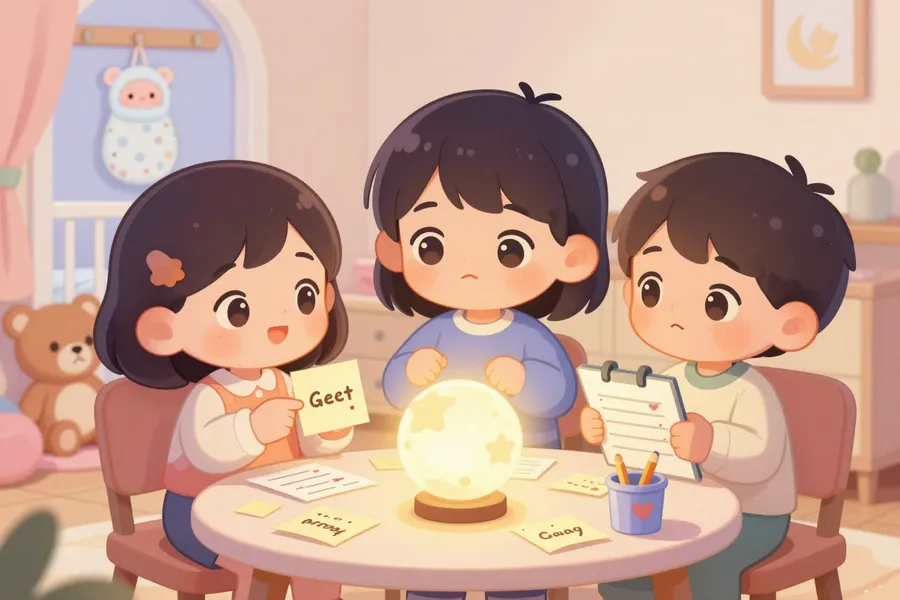
The best way to include a child in naming a baby is to not let the child name the baby.
That sounds harsher than it is. I mean the kinder version: give a child a real role inside a boundary adults have already set, because that is where the sweetness lives and the regret usually does not. Meghan Trainor and Daryl Sabara did exactly that with their daughter, born via surrogate in January 2026, when they let their two older sons choose her middle name, Mikey Moon. That is a neat little parenting trick. It gives the boys authorship without handing them the keys to the minivan. The baby still gets a name that belongs in the family story, and the parents do not spend the next eighteen years explaining why the newborn was briefly called after a family pet, a scooter, or the dog from a cartoon.
Frequently Asked Questions
Because a baby arrives like a thunderclap to the older child, and a small invitation can soften that shock. It can help with buy-in before the disruption, give the child a piece of authorship that survives the newborn attention shift, and create a story the family can tell later without rolling its eyes.
That is normal, especially for toddlers. The trick is to decide in advance which part of the name, if any, is open to them. If the boundary is the middle name, the nursery, or a stuffed animal, then the ridiculous answer can be charming instead of catastrophic.
Then you need to take the feeling seriously without reopening the decision. You can honor the suggestion, explain that adults chose differently, and give the child a visible job that still matters, like presenting the baby at a reveal or choosing the first book for the nursery.
| Child age | What they often suggest | What parents should hear |
|---|---|---|
| Toddler | A pet, a color, a cartoon character, a noise that is somehow a name | They are practicing power, not curating a future adult identity |
| Five to eight | A classmate’s name, a cousin’s name, a friend’s name, a name with social baggage | They understand names as social currency and may not see the awkwardness |
| Older child | Something reasonable, then a lot of feelings if it is rejected | They want to matter and may hear no as no to them |
I like sibling input best when it behaves like a velvet rope, not an open gate.
- Margot Reyes
Why families invite siblings into the naming process
Most parents are not trying to be cute for the internet, even when the internet notices. They are trying to make the baby less like an invader and more like a person already braided into the household. That matters. The older child has watched the belly grow, watched the crib appear, watched adults talk in that slightly breathless way people do when they are both excited and reorganizing their lives. Giving the child a naming role can turn some of that helplessness into contribution. It is also, frankly, a lovely story to tell the baby later. Not every family keeps the first ultrasound picture, but almost every family remembers who picked the middle name, who vetoed the snake name, and who cried when the name was not adopted. If the story is harmless, if the boundary is clear, if the child can later hear, "You helped," then inclusion is a gift rather than a surrender.
The Meghan Trainor and Daryl Sabara example works because the grown-ups already knew what the job was. Their sons were not deciding the legal first name from a blank sheet of paper. They were choosing a middle name, which is exactly the kind of contained participation that lets a child feel powerful without making the adults powerless. A middle name lives in the family room, not the front door. It can carry sentiment, silliness, homage, and all the joyful nonsense that children bring to a room, and the baby can still go out into the world with a name that is usable on a hospital form, a school roster, and a job application. That is the sweet spot.
What children of different ages will actually suggest
Your toddler will not surprise you with a refined appreciation for vintage Hebrew names. Your toddler will say whatever is nearest to the mouth and the heart. If the family dog is named Luna, there will be a brief and passionate campaign for Luna. If the nursery wall is painted green, the baby may become Green. If there is a cartoon they are obsessed with, that name may appear with total confidence, as if every baby in America were destined to share it. I have seen children at preschool pickup pitch names with the same gravity adults reserve for mortgage rates. Hazel, my daughter, once tried to rename a goldfish after a snack. Theo, my son, was briefly convinced that "Truck" was a dignified masculine choice. Children are not being absurd. They are being literal.
A five-to-eight-year-old is a different kind of hazard. They know names belong to people, which means they may suggest a classmate’s name with real confidence and absolutely no awareness of the social mess you are now holding in your hand. That is the age when the suggestion can sound entirely reasonable and still be unusable, because the child has not yet learned how many family politics hide inside a simple first name. Callie might be the nicest girl in second grade, but it also might be the name of the cousin who borrows money and never returns it, or the neighbor whose mother is still mad about the fence. Oliver may be a perfectly solid name, but your child may be asking for it because the friend with that name lets them play the rarest trading cards. The name is not the problem. The web of memory around it is the problem.
Older children can be the hardest, because they often make the most sense. They are old enough to understand the assignment, to think about the sound of the name, to compare options, to offer something that would not make a pediatrician blink. And then, if you say no, they can be devastated in a way that feels slightly unfair because the suggestion was genuinely good. This is where parents get trapped by their own generosity. You asked for help. They gave it. You rejected the result. No wonder someone storms off to their room like a wronged poet. The answer is not to exclude older kids entirely. The answer is to contain the decision before it gets emotionally sticky.
Here is the practical split I trust. Toddlers can do delight. School-age kids can do preferences. Older children can do participation, but only if you have already decided what participation means. That might sound like a small distinction, but families live or die on small distinctions. The child who helps choose between three names feels respected. The child who is told to brainstorm "anything you want" and then watch the adults ignore the result feels tricked. Those are not the same experience, and children know it long before they can explain it.
The four safe ways to contain the chaos
There are four ways I trust most, and they all share one trait: the child gets a real role, but not an unlimited one. First, give them the middle name only, which is what Meghan Trainor and Daryl Sabara did with Mikey Moon. Second, give them a shortlist and let them vote rather than invent from scratch. Third, let them name a stuffed animal, a baby doll, or the nursery corner, which scratches the naming itch without permanently attaching it to a human being. Fourth, take suggestions genuinely and write them down, but never promise adoption. The promise is what turns play into contract.
- Middle name only: the child gets ownership, the adults keep the first-name lane protected.
- Shortlist voting: offer a few names you would truly use, such as Abigail, Adeline, Arlo, Asher, Avery, Beau, Charlotte, Elliot, Nora, or Violet.
- A side project: let the older sibling name a stuffed animal, a nursery lamp, or the going-home blanket.
- Open suggestion box: listen warmly, take notes, and make no promises you cannot keep.
The shortlist option is especially useful if you know your child is old enough to feel included but not old enough to manage an open field. A child can absolutely help choose among Abigail, Adeline, and Charlotte if those are names you yourself could live with. They can usually hear the difference between Arlo and Elliot, or between Violet and Nora, even if they cannot explain why one feels sturdier than another. That is a good age for participation. The names are real. The choice is bounded. Nobody is going to end up with a baby named after the family hamster unless you have unusual household politics.
And yes, nickname-style names age fine. That is one of the great American naming truths, which is why a middle name can absorb the playful impulse so neatly. If you want something breezier, shorter, or more affectionate in the center slot, the child’s contribution can feel intimate without becoming embarrassing. I am never worried about a nickname-style middle name surviving adulthood. I am much more worried about creative spellings and impulsive full-name choices, which have a habit of landing like a tax every time somebody has to spell them twice on the phone.
The rule that matters most: never ask unless you mean it
Never ask a child to choose unless you are prepared to accept the answer, and never frame it as a decision if it is a consultation. That is the whole thing. Children can handle being invited. They cannot always handle being invited and then corrected as if their idea were cute but unserious. If you want advice, say advice. If you want a vote, say vote. If you want a real yes or no, mean yes or no. Adults create most of the disappointment when they blur the line and call it generosity.
This is especially important around the kind of names that feel easy in a nursery and heavier in a school office. A child may suggest something playful because they imagine the baby as a baby forever. You are the one who has to imagine the eight-year-old, the teenager, the adult filling out forms. The safest family naming moments happen when the grown-ups hold that future in mind and let the child contribute inside it, rather than pretending the future does not exist.
When the chosen name is not the one they wanted
Sometimes the child’s favorite does not make the cut, and the post-birth reaction can be bizarrely intense. A sibling may reject the baby’s name out loud, refuse to use it, or announce that the baby is "still" the rejected name and will remain so until the end of time. That is not a sign that your child has become permanently dramatic, though it may feel that way while you are holding a diaper blowout and a snack request. It is a sign that the child understood the naming moment as a chance to matter. Your job is to protect the relationship without reopening the decision.
The best response is short, calm, and not defensive. Try: "I know you hoped for Oliver. We chose Nora, and it is okay to feel disappointed. You still helped by giving ideas, and the baby loves the name we picked." Or, if the child refuses the chosen name, keep correcting gently without turning it into a courtroom. "We are using Nora now. You can be mad about it, but that is her name." Children do not need a referendum every time they are disappointed. They need a grown-up who can hold the line and still make room for feelings.
I also like giving the older sibling one unmistakable job after the baby arrives. Let them bring the going-home blanket. Let them place the first picture in the baby book. Let them announce the middle name at the family visit if that was their contribution. This matters because children can recover from disappointment when they can still point to proof that they mattered. They do not need to win the naming lottery to feel included.
Blended families need a sturdier version of the same rule
Blended families and step-siblings deserve a little extra care, because naming can accidentally carry a message about belonging that nobody meant to send. If a child is already worried about being peripheral, or about which adult gets to decide what, the name conversation can feel like a test of rank rather than a sweet family moment. That is where adults need to be very clear that consultation is not entitlement. A step-sibling can be included in a meaningful way without being made responsible for a final decision that belongs to the parents or legal guardians. The goal is connection, not governance.
In a blended household, timing matters more than theatrics. Do not bring up naming in the same breath as a new living arrangement, a custody shift, or a fraught conversation about household roles. Give the child enough context to understand that the baby belongs to the whole family in a loving sense, but do not suggest that their approval is required for the baby to arrive. That can create a burden no child should carry. A middle name, a nursery contribution, or a baby book entry can still be a genuine bridge. The bridge just has to be load-bearing.
The names themselves can help you think about the boundary. Abigail and Charlotte feel like names you could write on a birthday invitation and a resume. Adeline, Violet, and Nora have that sweet-spot polish where a child might like the sound now and still not hate it later. Arlo, Asher, and Elliot are sturdy enough to survive a sibling’s vote without sounding like a joke from the back seat. Avery and Beau are the kind of flexible, modern choices that fit the American habit of mixing surname-style cool, gender-neutral leanings, and the occasional Southern double-name sensibility that makes a middle slot feel especially useful. The point is not to chase trendiness. It is to keep the child’s contribution inside a name you would still stand behind at kindergarten registration.
Real examples of sibling-chosen names that worked
The celebrity version of this is not new, even if each family makes it feel freshly surprising. Children sometimes help name a sibling, especially when parents want the older child to have a visible place in the story. The strongest examples are almost always the contained ones, not the free-for-all ones. A middle name chosen by a sibling. A nickname affectionately assigned by a brother. A nursery sign picked by a sister who wants the baby’s room to feel like hers too. These work because they honor the child’s impulse without letting the whole system wobble.
I have a soft spot for names that can take a little family history without becoming inside jokes. Mikey Moon does that beautifully. Mikey is casual and affectionate; Moon has a dreamy, almost storybook feel. Together they sound like a name a child could help choose and a parent could still love years later. That is the whole assignment. Not every sibling suggestion has to become the first name to count as meaningful. Sometimes the right answer is a middle name that lets everyone feel seen, and nobody has to pretend the baby was named by committee.
A script for asking kids without making promises
"We are picking the baby’s name, and we want you to help us with one part. You can choose the middle name from these options, or you can tell us your favorite and we’ll listen. If we do not use your idea, that does not mean we do not love it. The grown-ups are still making the final decision, but you get to be part of it."
If you want the child to hear the boundary more clearly, say it again in plain language. "We are asking for ideas, not handing over the job." That sentence saves a lot of tears. So does this one: "You do not have to like our final choice, but you do have to let us use it." The baby name belongs to the adults even when the child helped shape it, and that is not a disappointment. That is the design.
If you want the contribution to feel official, put it in the baby book, on the nursery wall, or on the card that big sibling carries to the hospital. Let them tell the story later. The baby chose the middle name. The big sister named the stuffed bear. The older brother voted for Violet and got to say why. Those are the kinds of family facts that age well because they are true, bounded, and funny in the way real households are funny.
The safest version of sibling naming is not the least loving one. It is the one that leaves room for joy without creating a future apology.
— Margot
Find Your Perfect Baby Name Together
Still undecided? Swipe through thousands of names, match favorites with your partner, and discover the perfect name for your little one.
Sources
- Social Security Administration – Popular Baby Names : Used for U.S. naming data and trend context.
Discover App Features

AI List: Baby Name Suggestions That Learn Your Taste
See the names you and your partner are most likely to love first, picked by an AI trained on 380 million choices made by real parents.

How the Match Feature Works
Learn how to swipe, connect with your partner, and discover your mutual favorite baby names.

How the AI Baby Name Assistant Works
Get personalized name suggestions powered by AI, based on your favorites, matches, and preferences.

How to Create a Baby Name Poll
Create polls from your favorite names and let family & friends vote on their favorites.

How to Rank Baby Names with Battle Mode
Pit your favorite names head-to-head and let Battle mode rank them to reveal your winner.
Read More
Stranger Things Baby Names, From Eleven to Eddie and Max
From Eleven’s chosen name to Eddie Munson’s easygoing one, the names of Hawkins offer more than nostalgia. Which could you picture on your own baby?
Ancient Egyptian Names Beyond Cleo
Cleo is an easy name to love, but it is only the beginning. Meet names connected to Egyptian queens, rulers and gods, along with Greek and Egyptian Christian traditions.
Lucia and Jason: Baby Names Beyond Grand Theft Auto VI
A criminal couple in Vice City may put Lucia and Jason in the spotlight. Their stories, sounds and everyday possibilities reach much further.